

The Grand Princess Enza D'Alonzo Tiberio di Dobrynia

The Grand Prince Antonio Tiberio di Dobrynia
.png)
The Crown Prince Francesco Maria Tiberio di Dobrynia

The Grand Principality of Dobrynia
The Grand Principality of Dobrynia is a sovereign and independent, inalienable State.
Although without territory, due to various historical changes, the Grand Principality coincides with the residence and domicile of the Dynastic Head of the August House of Tiberius Dobrynia, a subject of public international law (Head of State pleno jure), with all the dynastic prerogatives deriving from the thousand-year lineage of a reigning Sovereign House that has survived to this day without ever having suffered debellatio, and with the right, under the Vienna Convention, of active and passive legation under the condition of reciprocity with other subjects of public international law.
The qualities that make a Sovereign a subject of international law constitute an absolute personal right, which the subject never relinquishes and which is independent of ratification or recognition by any preeminent authority inter peers; this right is transmitted “Jure sanguinis” to infinity, to one's descendants, in the person of the Head of Name and Arms of the Dynasty, hence the principle of English public law “Rex non moritur” in the sense of dynastic-functional perpetuation of this Royal Prerogative.

Government
Diplomatic Relations
The Grand Principality of Dobrynia encompasses and preserves the vast dynastic historical and heraldic heritage and the millennia-old Tradition and Sacred Light of the august imperial, royal, and grand-ducal House of Tiberius-Dobrynia, dating back to before the 10th century. This ancient lineage, "jure sanguinis," has Roman, Byzantine, Russian, and Aragonese origins, and boasts claims to the thrones of Muscovy, Kiev, Novgorod, Byzantium, and the Kingdom of Naples-Sicily.
A dynastic organization governed by the general principles of international law and conventions, and respect for fundamental human rights and freedoms. Recognized by several enforceable judicial decisions as a "Subject of Public International Law," the House of Tiberius-Dobrynia maintains diplomatic relations and engages in cultural and economic exchanges and cooperation with various countries for the development of important social and technological projects.

The Government of The Principality

The Official Anthem | The Augustal
The official State Anthem is “The Augustale”, specially composed with verses by Count Prof. Francesco Sanvitale and music by Maestro Marco Moresco.
Version by the Abruzzo Youth Orchestra and the Teramana Opera Season Choir, conducted by Maestro Paolo Speca.
Credentials / Republic of Kazakhstan
The Imperial House of Tiberius Dobrynia maintains diplomatic, cultural, and economic relations with the Republic of Kazakhstan, collaborating on economic and social development projects. Grand Prince Tiberius Dobrynia is recognized in all his dynastic prerogatives, with the establishment of institutional relations by the Governor of West Kazakhstan and the Ministry of Labor.
A Memorandum of Cultural Cooperation has also been signed between the dynastic Imperial Academy St. Nicholas University - Unimoscow and the Rector of the prestigious University of the Republic of Kazakhstan "Kazakhstan University of Innovation and Telecommunication Systems," a member of the technology sector of the important Association of Volga Universities.
Other official intergovernmental representations are in Malta, in the USA, in Latin America, etc.

Historical Recognitions of States
Historical recognitions / Chronological summary
1669: Iradeh (Decree) for the recognition of the Sultan Muhammad IV Osmane.
1788: Decree of recognition of the Duke of Modena Ercole III d'Este (26.4.1788).
1890: Imperial and Royal Decree of H.M. the Emperor of Austria and King of Hungary, and Aulic Decree of the Austro Hungarian Government.
1922: As a result of the Albertine Tables and the extension of the Statute of the Kingdom of Italy to the new provinces no longer subject to Austria, all previous recognition became productive of all heraldic and noble effects.
1923: Royal Decree of H.M. the King of Italy Vittorio Emanuele III (R.D., 7 January 1923).
1943: Decree of the Royal House of Savoy, signed Vittorio Emanuele III, King of Italy - no. 158 of Prot. / Ug. of 04.11.1943.
1944: Royal Decree of the Real Government of Yugoslavia in exile in London (R.D. of 27 April 1944).
International Sentences of recognitions
Modern recognitions / Chronological summary
Enforceable international judgments of judicial authorities in Italy and abroad, sentences valid in the territories of the States adhering to the New York Convention of 10 June 1958.
State publications / Direct sentences:
Official Bulletin of the Swiss Confederation, 11 March 2010.
Official Bulletin of the Puglia Region - Italian Republic, N. 74 of 12 May 2011].
Indirect sentence: The Augusta Casa has also been recognized by other enforceable international judgments, such as those of the “Corte de Justiça Arbitral do Brasil”, Rio de Janeiro: judgments N. 0228/2012, dated 20.02.2012; N. 1227/2012, dated 27.12.2012; from the international judgment of 10.03.2014 of the Arbitration Court of Padua, made executive by Decree of the President of the Ordinary Court of Padua (of 06.05.2014 N. 946/2014 RG 1276/2014); etc…
The governing principle is a modern, enlightened hereditary monarchy, within the framework of the general principles of international law and conventions, of respect for fundamental human rights and freedoms.
Institutional bodies: The Grand Crown Council, as the Supreme Council, is composed of seven Minister-Councilors with consultative powers, chosen and appointed by the Grand Prince.
The Council of State, a consultative or business-delegated governing body, chaired by the Prime Minister of State, is composed of seven Royal Ministers appointed by the Grand Prince, with the following Ministries: I Foreign Affairs; II Internal Affairs, Security and Intelligence; III Culture, University and Scientific Research; IV Finance, Economy and Development; V Health and Social Affairs; VI Justice and Legal Affairs; VII Heraldic and Ceremonial Consultation.
The Senate of the Kingdom is the single High Chamber of Senators, a collegial body that provides consultative powers on legislative matters.
DIPLOMATIC CORP
Gran Principality of Dobrynia

HG Grand Countess Daniela di Dobrynia
First Ambassador and Crown Spokesperson, Chief Executive Office of the Grand Prince

HE Prince Prof. Aldo Colleoni von Roerich
Ambassador Plenipotentiary, former Consul General of Mongolia in Italy, Chargé d'Embassies

HE Count Timurlan Baimukhambetov of Urals
Ambassador in Republic of Kazakhstan
Vice President of Baytak Party

HE Dr. Paolo Ierna
Honorary Consul At Large, in charge of Commercial Affairs

HE Prince Duke Arch. Don Daniel Coronado Vella
Honorary Consul in United States of America, international representative of the Imperial House of Dobrynia in the U.S.A.

HE Gen. Pietro Passariello
Honorary Consul in Malta, Chief of Staff of the ESIA/NATO Support Intelligence Security Agency, Malta

HE Prince Prof. Orazio Mezzetti Grimaldi di Dobrynia
Ambassador At Large, Chief of Cerimonial and Heraldic Consult, Honorary Rector and Professor Unimoscow.

HE Lawyer Stephanos Stephanou
Honorary Counsilor, Advocate General of the Supreme Court of Athens, Attaché for Relations with Greece and the Balkans.
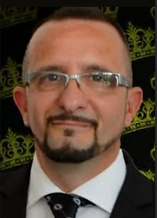
HE Duke Valentino Zanzarella
Honorary Counsilor, responsible for European relations

HE Prince Lawyer Ennio Maria Carrozzini
Honorary Consul, attaché for relations with the Republic of San Marino

HE Count Charles de Peyrac
Honorary Counsilor, responsible for investigations and research, Attaché for relations with Luxembourg

HE Prince Prof. Eugenio Magnarin d'Istria
Honorary Consul At Large, in charge of Cultural Affairs

HE Marquis Prof. Virgilio Trenga di Alicante
Honorary Counsilor in foreign affairs, Honorary Professor of Unimoscow - St. Nicholas University, jurist, specializing in oil law, financial instruments, and commodities

HE Prince Duke Prof. Dr. Marcello Gentile
Honorary Consul in France and in the Principality of Monaco.
Unimoscow Professor of Medical and Surgical Sciences

HE Count Dr. Balfour Zapler
Honorary Consul, in charge of relations with Israel and Brazil, intellectual, journalist, historic director of "Shalom", among the first special reporters to interview Fidel Castro

HE Count Prof. Francesco Sanvitale
Honorary Consul, in charge of relations with Japan, internationally renowned musicologist, former director of the Tosti Opera Institute in Ortona and of the Japan Institute in Nara and Tokyo
AD MEMORIAM
AD MEMORIAM
Departments

Grand Principality of Dobrynia
DEPARTMENTS

ESIA | NATO Support Intelligence Agency, Malta

Dobrynia Diplomatic & Law Firm, Bari Italy, Malta, Astana
